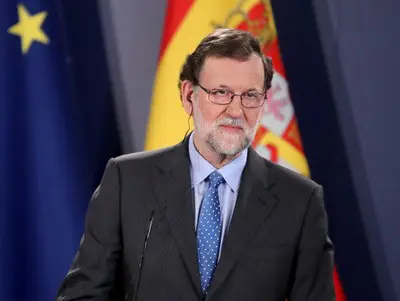
From Legal Prodigy to Political Powerhouse: Mariano Rajoy's Definitive Ascent
Mariano Rajoy Brey, a name synonymous with Spanish politics for over four decades, navigated a remarkable trajectory from a bright, young legal mind to the highest office in his nation. His journey, marked by rigorous academic achievement, strategic political maneuvering, and unwavering dedication to public service, culminated in his seven-year tenure as Prime Minister of Spain. Beyond the headlines and policy debates, his story offers a compelling look at the dedication required to reach the pinnacle of power, a path that has also shaped his personal finances, leading many to inquire about the specific details of the Mariano Rajoy Net Worth: Spain's Former Prime Minister's Finances.
A Foundation of Intellect: The Youngest Registrar
Born on March 27, 1955, in Santiago de Compostela, Spain, Mariano Rajoy's early life was steeped in a tradition of public service and intellectual rigor. His paternal grandfather was a notable contributor to the Statute of Autonomy of Galicia in 1932, a document of significant regional importance, though he later faced suspension from teaching during the dictatorship era. Rajoy's father, meanwhile, served as the president of the provincial court in Pontevedra, where young Mariano spent his formative years. This familial backdrop undoubtedly instilled in him an early appreciation for the rule of law and the machinery of governance.
Rajoy pursued a law degree at the prestigious University of Santiago de Compostela. His academic prowess shone brightly in his final year, as he successfully prepared for and passed the competitive examination to become a property registrar. At just 24 years old, Rajoy achieved this significant milestone, earning him the distinction of becoming the youngest registrar in Spain. He held posts in Padron (Galicia), Vilafranca del Bierzo (Leon), and Santa Paula (Alicante). This early professional success wasn't merely a personal achievement; it demonstrated an exceptional capacity for detail, legal understanding, and administrative competence – qualities that would prove invaluable in his future political career. It suggested a strategic mind, capable of excelling in highly competitive fields from a young age.
Forging a Path in Regional Politics: From Galicia to the Cortes
Rajoy's entry into the political arena was a natural progression for someone with his background and capabilities. In 1981, with the support of political figure José Luis Barreiro, he joined the People's Alliance (Alianza Popular), a conservative party that would later evolve into the People's Party (Partido Popular or PP). That same year, he was elected to the local parliament in the autonomous community of Galicia, marking his official debut in elected office.
His early political career was characterized by a rapid accumulation of diverse administrative and legislative experience within Galicia:
- 1982: Appointed General Director of the Liaison Committee of the Government of Galicia and Secretary of the Commission for Transfers between the State and the Autonomous Community of Galicia. These roles were crucial in shaping the region's relationship with the central government.
- 1983: Elected a member of the legislative council of the city of Pontevedra, deepening his involvement in local governance.
- 1986: Appointed President of the Legislative Council of the Province of Pontevedra, a position he held for five years, showcasing his growing influence and leadership capabilities at a provincial level.
A brief but significant detour occurred in 1986. Rajoy secured a parliamentary mandate in the Congress of Deputies, heading the electoral list for Pontevedra in the general election. However, a political crisis in Galicia led him to relinquish this national seat to assume the Vice Presidency of the Government of Galicia, demonstrating a commitment to his regional base and a willingness to step into challenging executive roles when needed. By 1988, he was appointed general secretary of the Popular Alliance branch in Galicia, consolidating his party leadership at the regional level.
The political landscape shifted dramatically in January 1989 when the People's Alliance underwent a crucial reorganization, transforming into the People's Party (PP) under the leadership of Manuel Fraga Iribarne. This marked a pivotal moment for Rajoy, who was appointed a member of the executive national committee of the newly formed PP, signifying his ascent from regional player to a national political force. His experience in regional governance and party structure provided a robust foundation for his future national roles.
Ascending National Ranks: Ministerial Portfolios and Vice Presidency
The People's Party's rise to power under José María Aznar in 1996 ushered in a new era for Rajoy, propelling him into a series of high-profile ministerial positions. This period showcased his versatility and capacity to manage diverse and complex portfolios, solidifying his reputation as a reliable and effective statesman:
- 1996-1999: Minister of Public Administrations. In this role, Rajoy was responsible for modernizing the Spanish public sector, a critical task for any developed nation.
- 1999-2000: Minister of Education and Culture. This position placed him at the heart of national policy on vital social issues, requiring negotiation and vision.
- 2000-2001 & 2002-2003: Minister of the Presidency (twice). This role, often seen as the right-hand man to the Prime Minister, involves coordinating government activities and strategic communication.
- 2001-2002: Minister of the Interior. A highly sensitive and demanding post, responsible for national security, law enforcement, and civil protection.
Beyond these specific ministerial roles, Rajoy's influence grew even further. From 2000 to 2003, he served as Deputy Prime Minister of Spain, a testament to his central role in Aznar's government. Concurrently, he also acted as Government Spokesperson from 2002 to 2003, becoming the public face and voice of the administration during a critical period. These roles required exceptional communication skills, political acumen, and an encyclopedic understanding of government policy, preparing him for the ultimate leadership challenge.
Leading the Opposition and Seizing the Premiership
In 2003, Rajoy was appointed Secretary-General of the People's Party, signaling him as the clear successor to Aznar. Following the party's defeat in the 2004 general elections, he transitioned into the demanding role of Leader of the Opposition in the Cortes, a position he held for seven years until 2011. This period was crucial for his political development, as it required him to articulate alternative policies, challenge the incumbent government, and consolidate his leadership within the PP. As party leader since 2004, he steered the People's Party through electoral defeats and internal challenges, demonstrating resilience and strategic patience.
The political tides turned in December 2011. In the midst of a severe economic crisis in Spain, the People's Party, under Rajoy's leadership, achieved a resounding victory. He succeeded José Luis Rodríguez Zapatero as Prime Minister of Spain, marking the culmination of a career dedicated to public service. His premiership, which lasted until June 2018, was defined by efforts to navigate Spain through economic austerity, high unemployment, and later, the political crisis in Catalonia. His steady, pragmatic approach during these turbulent times was a hallmark of his leadership.
Throughout his extensive public career, from a promising young registrar to the leader of his nation, Mariano Rajoy's financial standing has naturally been a subject of public interest. His reported Mariano Rajoy's $1 Million Net Worth: A Look at His Political Career reflects a career almost entirely spent in the public sector, where salaries are respectable but rarely lead to the vast fortunes accumulated in private enterprise. It underscores a life dedicated to the state, with his remuneration stemming directly from his roles as a civil servant, politician, and head of government.
Conclusion
Mariano Rajoy's political ascent is a testament to sustained effort, intellectual capacity, and a deep-rooted commitment to public life. From his early days as the youngest property registrar, a role demanding precision and legal mastery, to his long and varied career through regional councils, ministerial portfolios, and eventually the Prime Minister's office, Rajoy demonstrated a consistent trajectory of growth and influence. His journey reflects a career built on a foundation of legal expertise, developed through years of practical governance, and ultimately leading to the highest echelons of power. His story serves as a compelling case study in the dedicated, often incremental, path to national leadership, where experience and steady resolve are often the most valuable currencies.
